
“I'm already happy if they are willing to eat something in the morning!” Recognisable? A lot of primary schools organise at least one breakfast, Easter brunch or other (morning) activity related to healthy food. However, how can the school provide breakfast or brunch, with and for the pupils, that is actually healthy, takes into account Mother Earth and remains affordable? Breakfast or brunch with LEF (Local, Ecological, Fair), that is! Shall we find out more about it together with the pupils?
The pupils are involved (according to their level) in the preparations of a healthy breakfast or brunch at school. They look into the meaning of healthy and sustainable nutrition in the broad sense. The non-restrictive questionnaire below can help set up the research.
About me
- Do I have breakfast every morning? Why (not)?
- What do I eat for breakfast? What do I drink during breakfast?
- What do I like/not like/want to try eating?
- What do I eat as a morning snack?
- Looking at it from the food pyramid, where is my breakfast/snack on it?
- Is that good or could it be better? And what can I do to improve it?
- Is there much or little food wasted/thrown away at home? Why does that happen?
- How can I handle this differently? See also the curriculum of Kostbare Kost (Valuable Food)
About our food
- What is popular food and what is not? Why is that?
- What is the role of advertising and supermarkets in this? How do they influence us? See also the curriculum of Lekker Gezond (Healthy Food)
- Where does our food come from? Think about the ingredients of a healthy breakfast.
- How many miles did these ingredients travel until it ended up on our plate?
- How was it transported (by bicycle, truck, boat, plane, etc.)?
- What is the impact of air pollution on our health?
- How are fruit and vegetables grown? How does this usually happen in cattle breeding?
- How are salads (e.g. chicken salad) and cold cuts prepared?
- How does the local farmer deal with diseases and plagues? Use of artificial fertilisers, pesticides, antibiotics (cattle breeding) versus ecological farming.
- What are the possible effects of artificial fertiliser, pesticides and antibiotics on our health? And on nature?
- How much food is wasted/thrown away in Belgium every year? In the world? What do you think about that?
- What can we conclude from all this?
About the healthy breakfast/brunch at school
- Taking into account the previous research and its conclusions: which ingredients can we use to make a really healthy breakfast with as little food miles as possible?
- Are there producers within walking/cycling distance of the school who grow and sell their own food (vegetables, fruit, eggs...)? → short chain
- Ready-made salads are usually more expensive and contain lots of fats, etc. Can we invent or find recipes with fresh ingredients that meet the healthy and minimal food miles criteria?
- Can we calculate the cost price per person for the healthy breakfast/brunch?
- How do we make sure we don’t buy too much food, so that food waste can be kept to a minimum? Can we calculate this in advance? What do we do with possible leftovers?
Action 1
Prior to the healthy breakfast at school, each pupil maps out his/her breakfast and morning snack for one week based on the analysis of his/her own breakfast (see 'About myself'). At the end of the first week, the results are discussed and analysed in class. Based on this, improvement actions are proposed, which each pupil commits to carry out.
During the following two weeks, pupils continue to note, draw or photograph the composition of their breakfast and morning snack. At least once a week, the results are discussed, and if necessary, adjusted or supplemented with new actions. The exchange of healthy and (of course) tasty recipes is highly recommended!
Action 2
Based on the experiences from Action 1, the pupils create a menu for the healthy breakfast/brunch at school. This menu meets the following criteria:
- meets the recommendations of the food pyramid
- takes into account specific preferences (vegetarian, vegan, halal, allergies, ...)
- food miles are kept to a minimum
- the quantity is calculated so that there is as little food loss as possible
- a solution is sought for possible leftovers (sharing, donating, potluck, ...)
The pupils are actively involved in cooking and preparing the dishes, setting tables by the book, and clearing the tables and washing the dishes (if possible).
- Moms and dads, grandmas and grandpas are essential to make a success of these actions. Discuss with them in advance what is going to happen, what the intention is, what the criteria are, and whether they want to actively monitor the pupils at home or, why not, participate themselves.
- The healthy breakfast is an opportunity to put local food producers in the spotlight. Explain to them what the intention is and which criteria the breakfast/brunch needs to meet.
- Does the school population consist of different cultures? Great! Seize this opportunity to discover new flavours and have parents help out. Of course, pay attention to the predefined criteria.
- The municipality can help map out the local food producers.
- Fair trade is an essential part of healthy food. The local world shop knows all about it and will be happy to help. But fair trade is not only about fair prices for farmers in the South. The same goes for local farmers. Are you choosing fair trade products from the world shop? Then definitely keep the health and food miles criteria in mind.
- Can the school persuade a local (TV) cook to help with the breakfast/brunch? Do it! Don’t forget to also keep the set criteria in mind here.
- Have the pupils get creative with designing and creating the menu. Display it where parents wait to pick up their kids.
- Mention the intention of the activity on the menu and some posters. If possible, also mention the number of food miles the dishes have travelled.
- Explain why you chose a particular supplier (short chain, organic, food miles, ...)
- Share the initiative through the media channels known and used by the school.
- Invite dignitaries and the media. Use this opportunity to let the pupils elaborate on how you approached it all and which criteria were applicable.
- Testify at forums and meetings with other schools about your approach. Exchange experiences. Learn from each other.
In Flanders, approximately 907,000 tons of food is wasted every year! That is an enormous amount and hard to imagine. In Flemish households, about 33 kg of food is thrown away into the rubbish bin every year. On average, that means that about 90 grams of perfectly edible food is thrown away per person per day. (Source: curriculum Kostbare Kost)
- www.gezondleven.be: The website about healthy living (about more than just food). Below are some links to this website that may be of interest to schools. But don't hesitate to explore this yourself!
- www.gezondleven.be/themas/voeding/voedingsdriehoek: The light in the darkness for healthy food.
- www.gezondleven.be/leerlijnen: A complete learning line on all aspects of healthy and sustainable food. Work with the whole team to ensure that healthy and sustainable nutrition is present throughout the school year.
- www.gezondleven.be/settings/gezonde-school/een-voedingsbeleid-op-school: A good guide for schools that want to embed healthy and sustainable nutrition into their functioning.
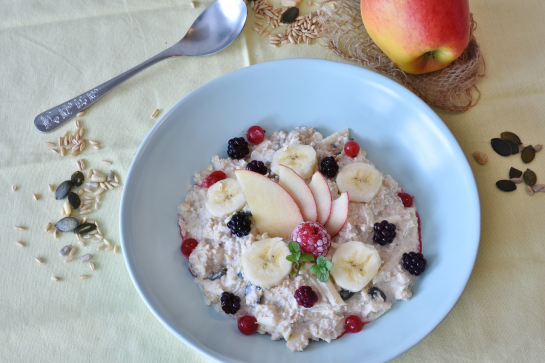
Did you know that…the food consumption survey (2004) shows that children (6-9 years) on average only eat 96 grams of vegetables and 120 grams of fruit a day?