
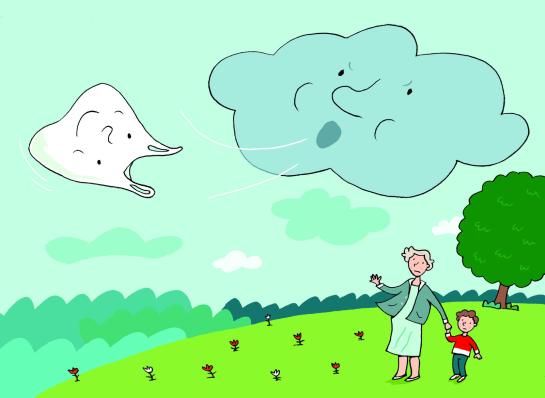
Grandma always reuses Zack, a plastic bag, for shopping. But Zack suddenly escapes from her hands and flows with the wind. He falls into a river and drifts all the way to the sea. There are a lot of animals that are hungry. They bite into Zack. And Zack is falling apart into little pieces. He wakes up from a bad dream, BUT IS IT A DREAM?
Theme: plastic, litter (wandering garbage)
Sub-themes: shopping, shopping bag, marine pollution, waste, reuse
- Children’s experiences in connection with holidays, the sea, beachcombing, litter, shopping, sorting, ...
- Children talk about their interest in fish, an aquarium, ...
- A child narrates a bad dream
- Friday, June 8, World Ocean Day
- May: plastic-free -> no plastic bags, water bottles, cups, straws, sandwich bags, foil, balloons, ...
Science and technology
- Nature: General skills: 1.2 The pre-schoolers show an exploratory and experimental approach to learn more about nature.
- Nature: Living and non-living nature: 1.4 The pre-schoolers can arrange organisms and common materials based on simple criteria they have found themselves.
- Nature: Health: 1.10 The pre-schoolers can in concrete situations recognize behaviours that are beneficial or harmful to their health.
- Nature: Health: 1.11 The pre-schoolers show good habits in their daily hygiene.
- Nature: Health: 1.12 The pre-schoolers know they can get sick from consuming certain products or plants.
- Nature: Environment: 1.13 The pre-schoolers show an attitude of care and respect for nature.
Man and society
- Man: me and myself: 1.2 The pre-schoolers can describe in a dialogue with an adult, in simple language, a recently happened situation they were involved in and tell the others how they felt about it.
- Man: me and the other: 1.5 the pre-schoolers can recognize in others feelings such as being afraid, happy, angry and sad and can empathize with these feelings.
- Man: me and the other: 1.6 The pre-schoolers know that people can experience the same situation in various ways and react to it differently.
- Man: me and the other: 1.7 pre-schoolers can show sensitivity to the needs of others.
- Man: me and the other: 1.8 The pre-schoolers can stand up for themselves by giving signals that are comprehensible and acceptable to others.
- Man: me and the other in group: 1.9 the pre-schoolers know and understand manners, precepts and agreements that are important for living together in a group.
- Man: me and the others in group: 1.10 the pre-schoolers can make arrangements in concrete situations with the help of an adult.
- Society: Socio-Economic Phenomena: 2.1 the pre-schoolers can describe in a simple way adults’ occupations and activities they know.
- Society: Socio-cultural phenomena: 2.5 the pre-schoolers will realise that some people have a different way of life compared to themselves, when they are confronted with images, information or people from another culture.
- Society: Political and Legal Phenomena: 2.6 the pre-schoolers can illustrate with concrete examples that people who live together organise themselves. Everyone must abide by the agreed rules.
- Society: Political and Legal Phenomena: 2.7 the pre-schoolers know that there are people who watch over the compliance with the rules in every society.
|
|

Feel: empathise |
|
|
|
Thinking: investigating |
|
|
|

Do: working in an organized and active way with children |
|

|
4.7 'by 2030 ensure all learners acquire knowledge and skills needed to promote sustainable development...' |
|
Ensure sustainable consumption and production patterns. |

|
14.1'By 2025, prevent and significantly reduce marine pollution of all kinds, particularly from land-based activities, including marine debris and nutrient pollution.’ |

Picture 0 – title + cover
|
|
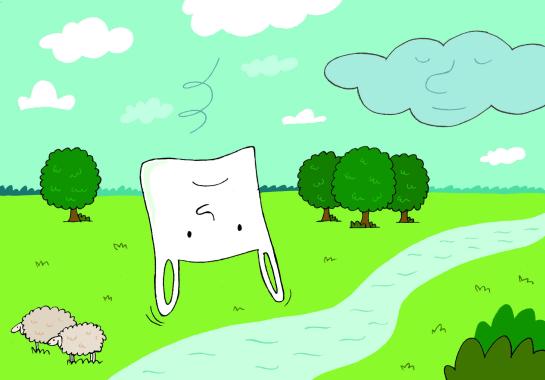
Picture 1 – Zack escapes
|
Possible key questions that go with this picture
|
Picture 2 – Zack is tumbling into the river
|
|
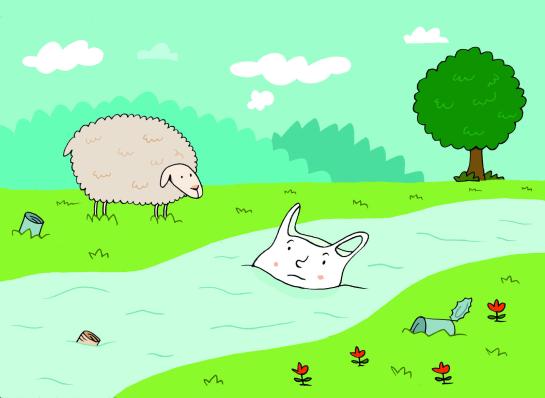
Picture 3 – Zack is floating on the water
|
Possible key questions that go with this picture
TIP |
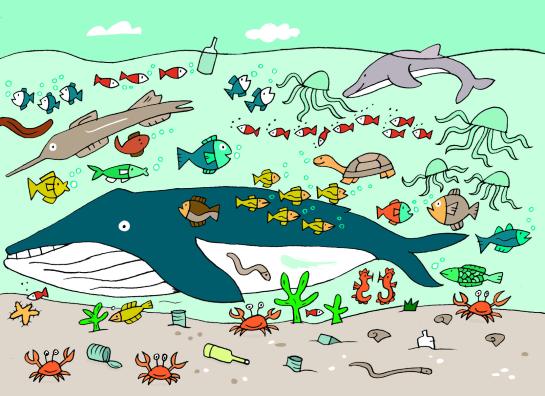
Picture 4 – The Sea
|
Possible key questions that go with this picture
|
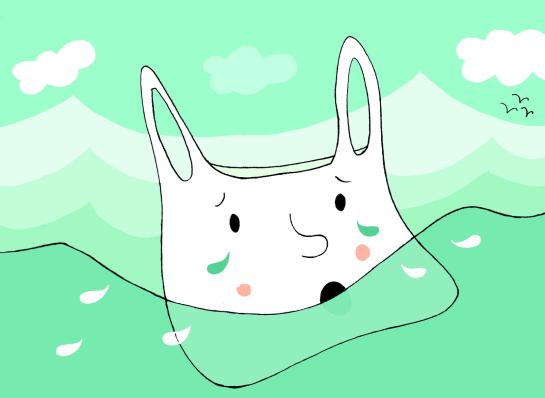
Picture 5 – Zack in the salty sea
|
Possible key questions that go with this picture
|
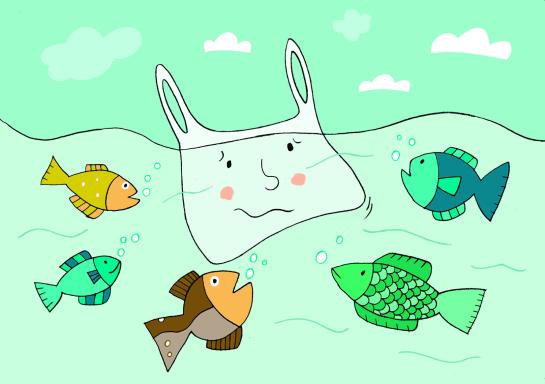
Picture 6 – Don’t touch me
|
Possible key questions that go with this picture
|
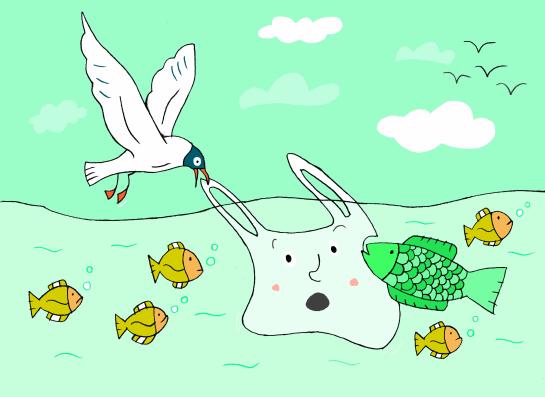
Picture 7 – Fish and seagull bite pieces of Zack
|
Possible key questions that go with this picture
|
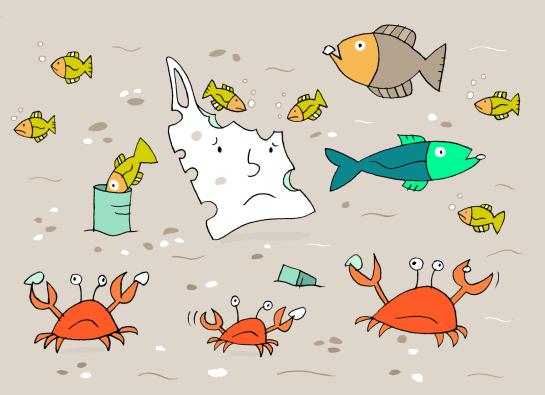
Picture 8 – Zack is getting small
|
Possible key questions that go with this picture
|

Picture 9 – Zack wakes up in the supermarket |
Possible key questions that go with this picture
|
Characters in the story
- Zack: is present in all pictures, except picture 4.
- Grandmother and grandchild: picture 1 and 9.
- Mistral, the wind: pictures 1 and 2.
- The sea with fish, plants and other sea creatures: pictures 4 and 6, 7 and 8.
- Seagull: picture 7.
Feelings of main character Zack
- Picture 1: Zack is happy, he cheers. Mistral is a bit angry.
- Picture 2: Zack is surprised, he can no longer fly. Mistral looks satisfied.
- Picture 3: Zack is afraid, feels lost.
- Picture 5: Zack is cold, he’s shivering and whining. He is weeping and tired. He is sad.
- Picture 7: Zack calls for help.
- Picture 9: Zack wakes up with a start and looks around, scared. He is relieved: it was just a dream.
Observe in detail
- Picture 1: Grandma reuses a plastic bag for shopping, the environment is beautiful / not polluted.
- Picture 2: environment is beautiful / not polluted.
- Picture 3: Environment and river are polluted (3 cans).
- Picture 4: Many kinds of fish and sea creatures, air bubbles around the fish, pollution of the sea with cans, bottles, ... Name the animals you see in the water?
- Picture 5: Can you see Zack's tears?
- Picture 7: Who is biting pieces of Zack?
- Picture 8: Pieces of Zack near the mouths of 2 fish and in the claws of 3 lobsters. Can you see the little pieces sinking to the bottom of the sea?
- Picture 9: What has grandma bought? What will grandma use it for? Does it come with a lot of packing material? Where should this material go after being used? Which leftovers should go into the green container?
Comparative observation
- Compare Mistral on picture 1 to Mistral on picture 2
- Compare Zack’s facial expression on the different pictures
- Can you find fish from pictures 6,7 and 8 on picture 4?
- Can you find the cans from picture 3 on picture 4 and picture 8?
- Do you notice the difference of grandma’s facial expression and that of her grandchild in picture 1 and 9?
End up somewhere / tumbling and rolling / float / teach a lesson / end up in the garbage bag / stand all alone / wave / reusable / it looks like I'm on fire / take out / empty belly / bite around / with great speed / moaning / cheering / nibbling / tickling / screaming / laughing and roaring / with a pop / leave in peace / bad dream / on the way / escape / revel in one’s adventure / notice / squeaky voice / snatch / supermarket / tears welled up in the eyes / tumble / disintegrate / wake with a start / seabed / sinking / just now.
Empathize with the characters of the story and come up with variations on the (shopping) story
Exchanging experiences and feelings
Empathy conversations on the basis of a photo viewing book
Empathize with the characters of the story and come up with variations on the (shopping) story
- Grandma takes an empty bag to go shopping. Is it a plastic bag she reuses or is she taking her shopping bag this time?
- Would you give the grandchild a first name?
- Does Zack also have friends (several types of plastic bags)
- Can fish speak?
- What sounds do Wind Mistral and Seagull make?
- Is Zack's dream just a dream or is it real?
Exchanging experiences and feelings
- About sleeping, dreaming, a weird or bad dream,...
- About shopping, what is used for packaging, what do you do with it? Avoid it, reuse it, throw it away?
- About wandering garbage, sorting: who helps sorting at home and at school? Why do we sort?
- Also knowledge about water, sea, aquarium, sea creatures, fish, goldfish, types of fish, the ocean,...seagulls or other animals that rip open rubbish bags?
- Drinking water at school and at home, the taste of salt and fresh water
Empathy conversations on the basis of a photo viewing book
- Fish in the river, in the sea,..
- Plastic and other waste in the water.
- Problems for fish: they choke on it, get stuck in it, think it is food, eat very small pieces, get sick with plastic in their stomach and die,...
- People who like fish also eat the small plastic pieces.
Observing plastic and experimenting with plastic bags
Investigate shopping bags, packaging materials and reuse
Children and parents’ participation
Observing plastic and experimenting with plastic bags
- What is made of plastic in the classroom: soft and hard plastics?
- What is plastic? What is it made of? Petroleum. Crude oil is pumped up from the earth and purified. Petroleum is also used to drive cars (diesel, gasoline) and to heat homes. See Kamoshibai story “Terra is ill”.
- Where is it made? In factories emitting dirty clouds.
- Functions and characteristics, types of plastic (soft, hard, biodegradable or not), advantages and disadvantages (it does not weigh much, remains good for a long time, is cheap, is difficult to break down, can be found everywhere, ends up in the sea, large quantities remain floating at sea (see plastic soup).
- Because soft plastic also lasts for a long time, it can easily drift all the way to the sea in a river. Is that far from here? Is it also the case with paper?
- What is plasticizing? Is it always necessary?
- Is it possible to eat plastic? What happens when animals eat plastic?
- Getting acquainted with plastic straws, cutlery, plates, stirrers, balloon sticks… they should no longer be produced and used.
- Experimenting with plastic bags: let different kinds of bags fly on the playground in windy conditions; submerge bags in water, let plastic bags float and sink. Make video recordings with a mobile phone or tablet and (re)watch them. Compare plastic bags to paper bags,… Formulate and test hypotheses. Draw conclusions.
Investigate shopping bags, packaging materials and reuse
- What do we take to the store to do the shopping? A shopping bag, different types of plastic and paper bags, also linen bags for fruit and vegetables are suggested and offered by department stores: function and characteristics, strength, ...
- What types of packaging material do you know? For example, for packing food: aluminum, tinfoil, paper bag, plastic, cardboard box for tomatoes, ...
- Do we use a lot of plastic when we go shopping? Will it be reused or is it a one-off? What are the advantages and disadvantages of plastic packaging, for example for drinks? How can we avoid / reduce it? What’s the difference between hard and soft (disposable) plastic.
- Do you know any other kinds of packaging? For example for drinks? Is there a recycling sign on the packaging? What symbol is it?
- Have you already seen it in the street when you go to school?
- Who uses it? What is it used for? What’s on that bag? What can you put in, not put in? Pros and cons? What is PMD?
- From 1 January 2021, all plastic packaging is welcome in the PMD bag in Flanders (e.g. jars, tubes, foils, bags ...), on top of the waste already permitted, such as plastic bottles, metal packaging and beverage cartons.
- What is it? Very large quantities of plastic that come together in the sea. Why do people say this is “soup”?
- How does plastic get into the sea?
- Search seas and oceans on the globe, on a world map or in a children's atlas.
- Select a video about this that is suitable for young children. Show the video and let the children respond spontaneously. Also show what people are trying to do to prevent this.
- Creative thinking: what can you make or invent to keep the sea clean?
- Can we avoid plastic, for example when we go shopping? How do we do that?
- Can we imagine a life without plastic, always avoiding plastic? What would we do differently? What are the problems and how are we going to solve them?
- How did our grandparents manage without plastic? Before the invention of plastic, people used wood, metal, glass, ceramics, clay and leather. Resin from trees was also used. Rubber was also widely used instead of plastic. For example, instead of a plastic box, people used a wooden box. Instead of a plastic biscuit box, people used a tin box, etc.
- Have you already seen plastic or other rubbish along the streets or in a park? How would it get there?
- Why do people call it "litter" or “wandering garbage”? What is wandering?
- Can we count, measure and photograph litter? And monitor whether it increases or decreases?
- How can we avoid litter?
- What litter can we clean up ourselves? What about the other waste?
- How can you clean up litter? What do you need for that? Gloves, a bag to collect the waste, grippers, ...
- Where should the litter be taken to?
- Excursion to a watercourse: observing how the water flows? Drop some leaves, observe the direction of the current, ... Is there waste, do some things float on the water? Do you see waste on the sides
- Exchanging experiences and request information about fish in the water
- Who has a (gold) fish at home? What do you know about it? What do fish eat?
- If available: experience and observation of the aquarium in the classroom, feeding the fish, caring for the fish, getting to know a few types of fish...
- Who has already seen fish in the sea?
- What problems do fish have with plastic?
Children and parents’ participation
- The children choose which fish(es) they want to learn more about.
- Professions: invite an expert to the classroom who comes to talk about litter, plastic, etc. It can be a waste collector, a waste park keeper, someone from the cleaning service, someone from a shop without packaging....
- Hobbies: invite a fish lover, a beach- or citycomber, etc.
- How is plastic made? Petroleum is heated to a very high temperature and then poured into a mould. After cooling all kinds of hard and soft plastic objects are created. Plastic foil is obtained by letting very hot oil run through a rolling machine.
- Who uses plastic and how can we use less of it? Explain the life cycle of plastic with examples:
- Factories make plastic
- Packing and transportation
- Display in the store: what happens to the wrapping plastic?
- Buy or avoid packaged things?
- Dispose of or reuse packaging: guidelines for the blue bag
- See breakdown times of litter e.g. see https://www.ivarem.be/afbraaktijden-zwerfvuil or https://www.wwf.nl/wat-we-doen/focus/oceanen/plastic-soep
- Reduce or avoid the use of plastic toothbrushes, get acquainted with alternatives: see https://www.wwf.nl/wat-we-doen/focus/oceanen/plastic-soep
Go shopping avoiding packaging and waste
- The children tell the story to another class or to their (grand)parents. Or perform it.
- They make a call to avoid plastic as much as possible.
- Make suggestions and choose an action together.
Go shopping avoiding packaging and waste
- This can be done together with the (grand)parents. Go to the market or to the store with reusable bags.
- What do we buy without plastic?
- Discussion and processing in the classroom.
- Find out what we use bags for: to the library, a story bag, a bag to take work home, a back and forth bag, a shopping bag, ...
- Stamp printing on bags for themselves or for other classes, ...
- Design posters, ...
- Take action: go to the store, department store, factory or mayor to ask to use less plastic packaging: letter, visit….
- Clear agreements and demonstration on litter collection: how do we proceed? What tools do we need?
- Exploring and cleaning up the playground and the area around the school. Sorting: is this plastic or not? How do you pick it up? Which bags do we use? Where do we take it?
- Designing and placing signs to prevent litter.
- See MOS action card 'Say No To Waste': https://www.mosvlaanderen.be/mos-actiefiche-we-zeggen-neen-tegen-afval
- See also MOS-statement 'Alternatives to balloons': https://www.mosvlaanderen.be/mos-actiefiche-op-zoek-naar-alternatieven-voor-de-plastic-ballon
